Top China Heavy Duty Drive In Racking Manufacturers & Manufacturer
Precision Structural Engineering, Cold-Formed Steel Mastery, and High-Density Pallet Storage Innovations for Global Intralogistics
Technical Evaluation & Procurement Architecture
Engineering Density: The Strategic Sourcing of Heavy-Duty Pallet Racks
A rigorous industrial perspective on evaluating tier-1 Chinese manufacturers for drive-in racking, cantilever assemblies, and custom high-bay industrial steel systems.
In contemporary warehousing infrastructure, optimizing volumetric cubic utilization is an imperative that directly drives unit-economics in high-throughput distribution hubs, manufacturing staging facilities, and cold storage operations. Sourcing from a reliable China heavy duty drive in racking manufacturer is no longer simply an arbitrage of structural raw materials. Rather, it has evolved into a strategic evaluation of structural dynamic loading capabilities, seismological compliance (such as RMI, FEM 10.2.02, and AS4084 standards), roll-forming tolerances, and the integration readiness of warehouse control software.
Drive-in racking architectures operate on the LIFO (Last-In, First-Out) or FIFO (First-In, First-Out drive-through) material handling principle, removing traditional access aisles to dedicate up to 85% of warehouse footprint to pallet storage. As pallet loads routinely exceed 1,000 kg to 3,000 kg per bay across multiple vertical tiers, structural steel integrity is paramount. This whitepaper analyzes the manufacturing methodologies, metallurgy profiles, engineering tolerances, and procurement strategies defining the top echelon of industrial storage equipment fabrication.
Engineered Equipment Roster
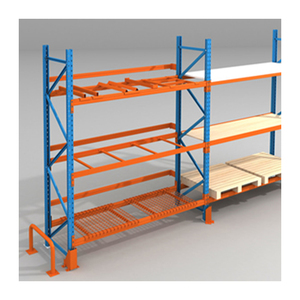
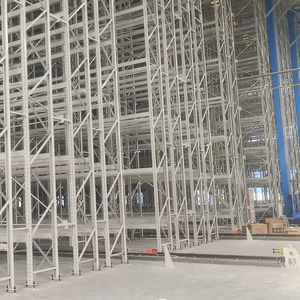
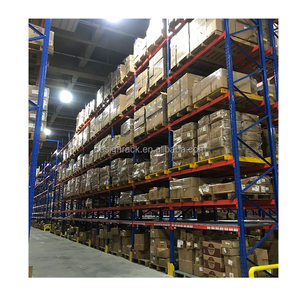
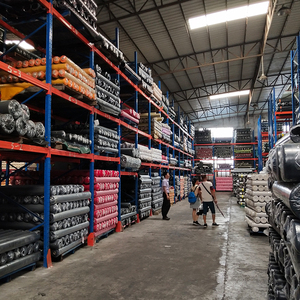
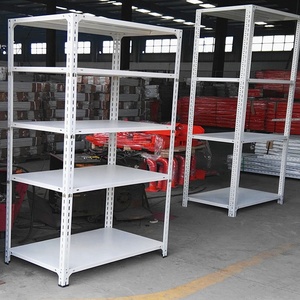
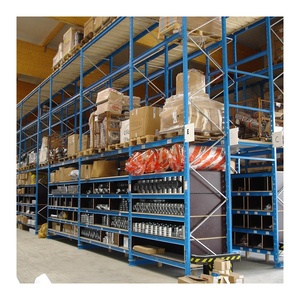
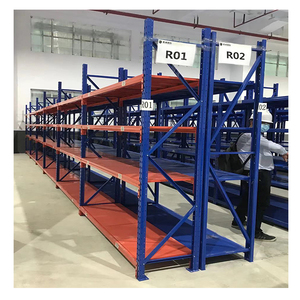
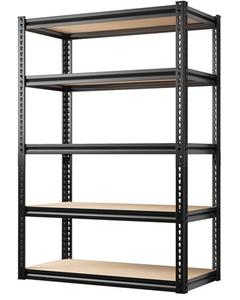
Featured Heavy Duty Storage Racks & Pallet Systems
Continuous-line manufactured, high-tensile structural systems designed for intensive material handling.
Engineering Insights: Drive-In vs. Selective vs. Automated Shuttles
The decision-making hierarchy for warehouse layout configurations depends directly on SKU concentration, throughput cycle times, and floor-space capitalization. Drive-in pallet systems eliminate intermediate operating corridors, allowing forklifts to drive directly into the structural rack bays. While this increases storage density by up to 60-80% compared to standard wide-aisle selective racking, it imposes unique engineering demands upon the steel structure:
Evaluation Parameter
Drive-In Pallet Racking
Selective Pallet Racking
High-Density Pallet Shuttle
Volumetric Space Utilization
Very High (up to 85% cubic efficiency)
Moderate (40% - 50% cubic efficiency)
Maximum (85% - 92% cubic efficiency)
Stock Rotation Logic
LIFO (Drive-In) / FIFO (Drive-Through)
100% Immediate Direct Access (FIFO/LIFO)
Software Configurable (FIFO & LIFO)
Forklift Mast Exposure Risk
Elevated inside rack bays (Requires floor guides)
Minimal (External aisle operations)
Zero internal mast entry (Semi-automated cart)
Structural Upright Section Depth
80mm – 120mm Omega Cold-Formed Steel
70mm – 100mm Standard C-Profiles
Reinforced 90mm – 140mm Structural Uprights
Ideal SKU Matrix
Fewer SKUs with bulk pallets per product
Large SKU range, fast sorting, low pallet volume
Deep lane staging, FMCG buffers, cold storage
Structural stability in drive-in racking lacks intermediate load-supporting crossbeams across the access lanes. Instead, pallets rest on cantilevered side brackets welded or bolted to continuous horizontal support rails. To compensate for the absent cross-aisle rigidity, top horizontal tie-beams, back perimeter diagonal bracings, and specialized floor-mounted ground guidance angles must be calculated via finite element analysis (FEA).
Manufacturing Execution System
Core Engineering & Operational Advantages
High-precision metallurgy combined with end-to-end industrial production guarantees life-cycle durability.
High-Tensile Q235B & Q355B Steel
Procured strictly from certified primary steel mills, our uprights and horizontal beams exhibit exceptional yield and tensile strengths, formulated to withstand intense dynamic seismic activity and sub-zero cold-storage embrittlement.
Continuous CNC Roll-Forming Lines
Uprights are manufactured on fully automated 24-station continuous roll-forming lines, maintaining slot pitch tolerances within ±0.1mm to guarantee perfect structural alignment and stress distribution across assemblies.
Thermoset Epoxy Powder Coating
Surfaces undergo rigorous multi-stage pre-treatment, pickling, and phosphating prior to automated electrostatic powder application, creating an impermeable barrier against mechanical chipping, moisture, and chemical corrosion.
FEA Structural Simulation
Every system is simulated with 3D structural analysis software, ensuring compliance with international warehouse building codes, seismic factors, and variable slab conditions before committing to metal fabrication.
Integrated Safety & Impact Protection
Reinforced floor anchors, column protectors, heavy-duty wraparound upright bullnoses, and solid pallet guide rails prevent structural destabilization caused by frequent forklift navigation inside the storage lanes.
Global Logistics & Turnkey Delivery
Backed by an extensive international supply framework across 70+ countries, we manage multimodal ocean container freight, clear technical customs documentation, and provide certified field engineer commissioning worldwide.
Future Sourcing Trends: The Next Decade of Heavy Duty Drive-In Systems
The global intralogistics supply chain is undergoing profound structural shifts. Enterprise procurement officers are balancing capital expenditures with agility, automation compatibility, and carbon auditing. Leading Chinese manufacturers are investing heavily to match these future requirements:
1. Hybrid Automation: Transition from Manual Drive-In to Semi-Automated Shuttles
A primary risk factor of traditional drive-in racking is forklift-to-frame collision. Modern distribution centers increasingly specify Convertible Drive-In Architectures. These systems feature universal upright profiles that initially operate as traditional forklift-accessed drive-in bays, but can be seamlessly retrofitted with 2-way or 4-way autonomous pallet shuttles without requiring full structural replacement or floor dismantling.
2. Cold-Chain and High-Humidity Specialization
Driven by pharmaceutical cold storage and frozen food logistics, industrial racks require advanced surface treatments. Galvanized steel (pre-galvanized coils or hot-dip galvanization) is rapidly supplementing standard powder coatings. Chinese manufacturers have upgraded high-velocity continuous dipping facilities to meet ISO 1461 standards, mitigating micro-fissure rust formation down to -30°C.
3. Digital Twins, Sensorization, and WMS/WES Integration
The integration of Warehouse Management Systems (WMS) directly with racking infrastructure is standard practice. Advanced installations now embed RFID tracking targets, weight deflection sensors, and IoT tilt monitors along critical upright channels, offering real-time structural health monitoring directly into enterprise software consoles.
Procurement FAQ
Frequently Asked Questions by Industrial Sourcing Teams
Actionable technical criteria for risk-free international procurement and engineering validation.
What structural design standards are used to engineer Chinese drive-in racking?
Qualified Chinese manufacturers engineer systems according to European standards (EN 15512, EN 15620, FEM 10.2.02), American RMI (Rack Manufacturers Institute) MH16.1 specifications, and Australian AS4084 standards. Third-party structural inspection certificates (such as SGS or TÜV Rheinland) verify maximum deflection values under ultimate limit state (ULS) and serviceability limit state (SLS) conditions.
How do we prevent frame damage from forklifts entering drive-in bays?
Drive-in systems require a comprehensive impact prevention assembly. This includes ground-level guidance rails (structural angle steel or heavy C-channels) bolted directly to the reinforced concrete slab to guide the truck's wheels, heavy-duty wraparound steel column protectors at the entry uprights, and tapered lead-in pallet rail designs that center the load as the forklift advances into the lane.
What essential floor slab data is required before designing a heavy-duty system?
Engineers require concrete slab thickness (typically 150mm to 250mm+), concrete compressive strength (e.g., C25/30 or C30/37), reinforcement mesh density, expansion joint positions, and floor flatness ratings (DIN 18202 or ASTM E1155). This ensures upright baseplates are correctly sized to distribute point loads safely across the warehouse floor without slab puncture or settling.
What is the typical production and delivery lead time for customized pallet racking projects?
Standard manufacturing lead times for customized high-density racking range between 20 to 35 business days after structural shop drawing approvals. Ocean freight depends on the destination port, generally 14 to 22 days to the US West Coast or Southeast Asia, and 28 to 35 days to European ports or the US East Coast.
Can your drive-in systems be converted into automated pallet shuttle systems later?
Yes. By anticipating future automation at the design stage, we engineer upright frames and depth rails with modular bolt patterns that accommodate standard automatic pallet shuttle tracks. This enables warehouses to transition from manual forklift drive-in lanes to high-speed semi-automated radio shuttle operations without structural decommissioning.