Intralogistics Engineering
High-Performance Automated & Heavy-Duty Racking Portfolio
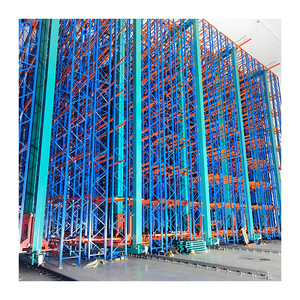
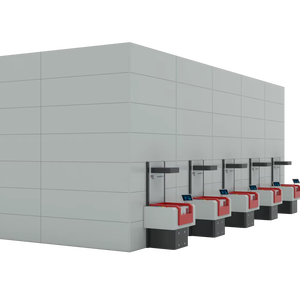
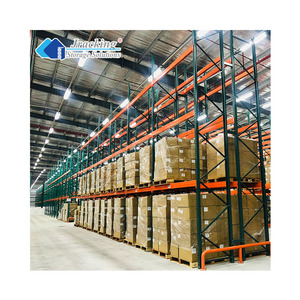
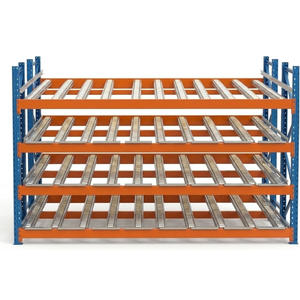
Engineered for high payload integrity, extreme vertical stability, and seamless compatibility with ASRS, stacker cranes, and automated shuttle systems.
60+
Years of Engineering Experience
70+
Countries Served Worldwide
12
Global Direct Production Centers
7
Dedicated R&D Centers
Industry Whitepaper & Technical Analysis
Architectural Evolution of Heavy-Duty Automated Storage Racking Systems
Modern distribution facilities and production plants are undergoing an unprecedented shift toward dense, high-bay vertical integration. As land valuation surges and operating complexities multiply, heavy-duty racking has evolved from passive structural steel framing into dynamically responsive, machine-toleranced kinetic systems. Modern ASRS (Automated Storage and Retrieval Systems) and high-density radio shuttle frameworks require sub-millimeter manufacturing tolerances, seismic dissipation damping, and structural alloys capable of withstanding dynamic cyclic loads around the clock.
As a global tier-one manufacturer and exporter, our engineering paradigm aligns with FEM (Fédération Européenne de la Manutention) 10.2.02 and RMI (Rack Manufacturers Institute) standards. We integrate premium structural steel grades (such as high-yield Q235B and Q355B micro-alloyed carbon steels) with sophisticated cold-roll-forming profiles. This structural rigor ensures that whether you deploy stacker cranes with 2,000kg pallet payloads at 40-meter heights, or continuous-flow gravity rollers handling rapid inventory turns, mechanical deflection is strictly mitigated to prevent automated sensor trips and equipment lockouts.
Future Procurement Trends in Industrial Storage Racking (2025–2030)
Logistics directors, supply chain engineers, and EPC procurement leads must anticipate fundamental market movements when specifying industrial warehouse racking. Our market telemetry and intralogistics consultancy data highlight three dominant procurement trends redefining global operations:
- Clad-Rack (Rack-Supported Buildings) Substitution: Accelerating preference toward clad-rack warehouse engineering, where the heavy-duty racking matrix serves as the primary load-bearing structural skeleton supporting walls and roof panels, cutting total civil construction timelines by 25% to 35% and drastically reducing municipal CAPEX.
- Kinetic AMR & Shuttle Symbiosis: Traditional aisle-bound forklifts are rapidly being phased out in favor of 4-Way Multi-Shuttles and Autonomous Mobile Robots (AMRs). Specifiers now require dual-purpose heavy-duty frames with factory-machined guide rails, anti-skid galvanized decking, and standardized transfer interfaces for pick-and-place robots.
- Predictive Structural Health & Digital Twin Monitoring: Integrating IoT-enabled dynamic load cells and tilt sensors directly inside upright bases. Procurement tenders increasingly specify structural compatibility with digital-twin Warehouse Management Systems (WMS) to track localized beam deflection, ambient seismic vibration, and impact strain in real time.
Why Choose Our Manufacturing & Global Export Infrastructure
Selecting a heavy-duty automated storage racking partner involves far more than comparing steel tonnage costs. It demands verifiable manufacturing control, structural simulation capabilities, and end-to-end project execution. Our global client base—including industry pioneers such as Würth, Renault, PepsiCo, Schneider Electric, and Nestlé—relies on our turnkey ecosystem for critical reasons:
Direct Manufacturing Purity
Spanning 12 advanced production centers, our automated continuous roll-forming lines, automated powder-coating processes, and robotic laser-welding work cells ensure complete dimensional consistency with zero outsourcing deviation.
In-House Finite Element Analysis (FEA)
Every customized racking installation is calculated using advanced finite element software. We compute project-specific wind-uplift loads, floor-slab deflection limits, and complex dynamic seismic factors across all international seismic spectrums.
End-to-End Export & Lifecycle Support
With an active commercial network reaching over 70 countries and offices across 23 nations, we handle specialized overseas container packing, site installation supervision, load compliance verification, and ongoing statutory safety audits.
Procurement & Technical FAQ
Key Technical Clarifications for Heavy-Duty Racking Investments
Direct architectural, mechanical, and logistical guidance addressing common queries evaluated by warehouse engineers, finance managers, and intralogistics procurement specialists.
What load tolerances differentiate standard pallet racking from ASRS-grade racking?
Standard manual pallet racking designs typically tolerate beam deflections of L/200 or L/250 under static loads. Conversely, high-bay automated racking integrated with automated stacker cranes (ASRS) enforces strict deflection parameters of L/300 to L/400 or narrower. This prevents optical sensor misalignment, laser guidance deviations, and automated shuttle carriage stalling within high-speed picking corridors.
Can an existing standard warehouse facility be converted to automated shuttle racking?
Yes. Many clients convert wide-aisle conventional installations into high-density radio shuttle or AMR operational zones without building modifications. Key prerequisites assessed during our site feasibility review include structural slab load capacity (kN/m²), floor levelness per DIN 18202 Table 3 or ASTM E1155 F-min criteria, clear overhead clearance below fire sprinklers, and power feed capacity.
How are seismic loads calculated for overseas export installations?
Export projects are structurally engineered using site-specific ground acceleration values and local geotechnical soil classes. We model our high-tensile steel assemblies against regional codes, including Eurocode 8 (EN 1998), IBC (International Building Code), and ASCE 7. Calculations dictate upright column profiles, reinforced baseplate geometries, and diagonal cross-bracing frameworks.
What surface finishes are recommended for cold storage and corrosive settings?
For ambient temperature, non-chemical warehouse facilities, an electrostatic epoxy-polyester powder coating (cured at 200°C with an average thickness of 60-80 microns) provides high abrasion and impact resistance. For deep-freeze environments (down to -30°C) or corrosive chemical and seaside installations, hot-dip galvanizing (HDG) or pre-galvanized high-yield steel coils provide lasting corrosion prevention.
Consult Directly with our Warehouse Systems Engineers
Send us your building schematics, pallet parameters, load profiles, and target throughput values for an immediate engineering assessment and preliminary layout simulation.