Industrial High-Density & Heavy-Duty Storage Configurations
Calculated to European Standard EN 15512:2020 load requirements and verified for rigorous multi-shift operations in automotive, FMCG, steel, and temperature-controlled Benelux hubs.
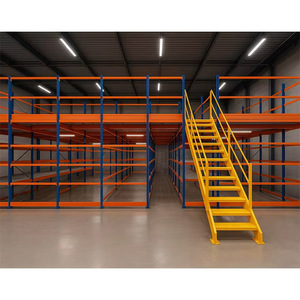
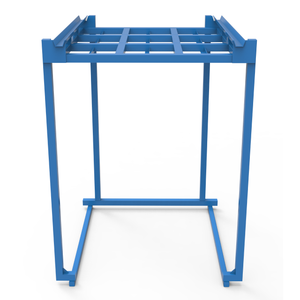
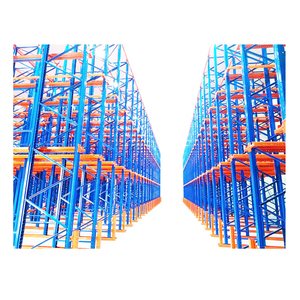
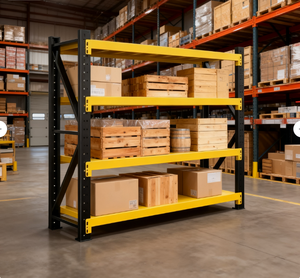
The Strategic Imperative for Heavy Duty FIFO Racking in the Grand Duchy
Luxembourg occupies a disproportionately critical nexus within the Western European logistics grid. Sandwiched between Germany’s industrial powerhouse, France’s consumption hubs, and Belgium’s maritime gateways, warehouse space in the Grand Duchy represents some of the highest capital expenditure per square meter in continental Europe.
Land Scarcity & Eurohub Density
Industrial plots at Bettembourg-Dudelange (Eurohub Sud) and Contern command premium valuations. Traditional selective racking wastes upwards of 55% of warehouse floor space in access aisles. Heavy Duty First-In, First-Out (FIFO) dynamic gravity racking and multi-deep radio shuttle lanes eliminate redundant forklift transit lanes, compressing footprint while elevating cubic storage volume by up to 80%.
Strict Batch & Lot Segregation
For high-turnover sectors such as Luxembourg’s booming biopharma cold chain (Luxembourg Findel CargoCenter) and high-value chemical processing, FIFO compliance is not merely an operational preference—it is a non-negotiable regulatory mandate. Gravity live roller channels guarantee strict date rotation without relying entirely on manual driver discipline.
Decarbonized Material Handling
Under Luxembourg's national "Plan National Intégré en matière d'Énergie et de Climat" (PNEC), logistics operators face rigorous corporate carbon reporting. FIFO gravity pallet flow utilizes natural gravitational kinetic energy rather than continuous electric counterbalanced forklift motion, slashing battery recharging cycles and warehouse transit emissions.
Engineering Dynamics: Roller Beds, Centrifugal Brakes, and Load Physics
Unlike static selective beam racking, heavy-duty dynamic FIFO racking operates as an active kinetic mechanical system. Every single channel must balance gravitational incline, load mass variance, frictional drag, and pallet bottom-board integrity.
The 3.5% to 4.0% Gradient Equilibrium
Our heavy-duty live storage beds incorporate precision-stamped, cold-formed steel frames pitched at a validated gradient between 3.5% and 4.0%. This precise slope overcomes static inertia for heavy European pallets (EUR 1, EUR 2, Chep 1200x1000) weighing up to 1,500 kg, without generating excessive runaway velocity.
Centrifugal Speed Controllers: Embedded within the split cylindrical rollers at calculated intervals (typically every pallet position), centrifugal brake rollers engage proportional braking resistance. Pallet descent velocity is governed strictly to a safe terminal velocity of 0.20 to 0.25 meters per second, eliminating structural impact shock at the unload face.
Load Separator Mechanics: The critical bottleneck in high-throughput FIFO lanes is line pressure. A mechanical pallet separator isolates the front extraction pallet from the accumulated queue behind it. Once the forklift operator clears the primary load, the separator releases automatically, indexing the next pallet into the discharge position with zero line pressure applied to the mast.
Structural Tolerances & Material Specifications
- Upright Profile Engineering: S355 high-tensile micro-alloyed structural steel cold-formed into omega and box-channel profiles capable of supporting bay loads in excess of 24,000 kg.
- Split Roller Technology: Heavy-gauge galvanized steel rollers with dual deep-groove sealed ball bearings (2RS) tested for 2,500,000 continuous revolutions under full operating payload.
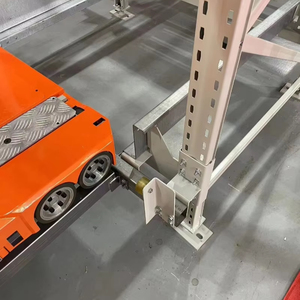
- Anti-Collision Protectors: Reinforced wrap-around anchor guards anchoring directly to C25/30 floor slabs, dissipating side impacts from heavy reach trucks and counterbalance equipment.
- Dual Entry Guidance: Heavy entry funnels with lead-in rollers assist forklift positioning, ensuring off-center pallets auto-align perfectly along track centerlines.
Industrial Topologies: Tailored Luxembourgish Application Scenarios
From multi-modal cross-docking at the French-Belgian-Luxembourg tri-border to automated cleanrooms, our racking deployments match the specific micro-logistics challenges of the Grand Duchy.
Cross-Dock Rail-to-Road Transshipment Buffers
At the CFL multimodal terminal in Dudelange-Bettembourg, incoming container freight must rapidly transition between railway rolling stock and distribution fleets bound for Brussels, Frankfurt, and Paris. Our heavy-duty 4-deep and 8-deep pallet flow FIFO channels act as zero-energy buffer accumulators directly between inbound unloading and staging docks.
- Decouples unloading shifts from line-haul dispatch schedules.
- Accommodates variable Euro and ISO block pallet dimensions without jam risks.
- Zero electrical power consumption across dynamic buffer zones.
GDP-Compliant Biopharma Cold Chain Accumulation
Luxembourg Airport represents one of Europe's most sophisticated air-cargo hubs for temperature-sensitive pharmaceuticals. In cold-room installations operating at +2°C to +8°C and deep freeze (-25°C), vertical air circulation and space optimization are vital. Every cubic meter of refrigerated air represents direct energy costs.
- High-density deep flow reduces refrigerated footprint by up to 60%.
- Low-temperature grease and anti-condensation bearing seals prevent freeze-seizure.
- Guarantees strict First-Expiry, First-Out (FEFO) execution for certified WHO-GDP compliance.
Tier-1 Just-In-Time (JIT) & Just-In-Sequence Staging
Luxembourg’s Tier-1 automotive manufacturing sector (including tire engineering, sensors, powertrain electronics, and chassis components) feeds major automotive assembly plants in Baden-Württemberg and Grand Est. Buffer racking must execute faultless chronological sequencing to prevent catastrophic assembly stoppage.
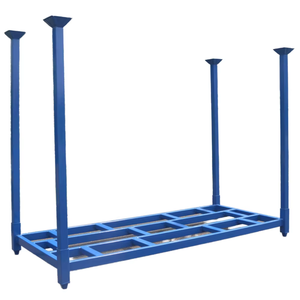
- Custom heavy-duty steel stillages integrated seamlessly on roller tracks.
- Complete physical separation of loading aisles and picking corridors enhances worker safety.
- Seamless handoff to Autonomous Mobile Robots (AMRs) at discharge pick stations.
FMCG, Dry Goods & Multi-Tenant 3PL Hubs
Regional 3PL operators serving local supermarket chains (Cactus, Match, Auchan) handle thousands of distinct SKUs with rapid expiration schedules. In mixed-tier distribution facilities, combine lower-level FIFO live roller tracks for high-velocity fast-moving pallet picking with upper-level selective buffer storage.
- Pick-face replenishment conducted continuously from rear aisle without order picker disruption.
- Pick operator travel distances reduced by up to 65% compared to wide-aisle static bays.
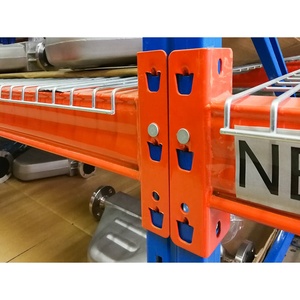
- Modular boltless beam connections allow quick reconfiguration as SKU dimensions evolve.
Comparative Analysis: FIFO Gravity Flow vs. Alternate Storage Paradigms
Choosing the right industrial racking system requires balancing storage density, selectivity, mechanical complexity, and lifecycle operational cost (TCO).
| Racking Architecture | Rotation Logic | Floor Space Utilization | Forklift Travel Time | Energy Demand | Safety Standard Fit |
|---|---|---|---|---|---|
| Heavy-Duty Pallet Flow Dynamic Roller Track | Strict FIFO | 85% – 90% (Ultra High) | Low (Dedicated Access Aisle) | 0 kWh (Pure Gravity Driven) | EN 15512 / ITM Approved |
| 4-Way Radio Shuttle ASRS Semi / Fully Automated | FIFO & LIFO Flexible | 90% – 95% (Maximum) | Minimal (Automatic Transport) | Low (Rechargeable LiFePO4) | CE / Machinery Directive |
| Push-Back Racking Nested Cart / Roller Bed | Strict LIFO | 70% – 75% (High) | Moderate (Single Aisle In/Out) | 0 kWh (Forklift Push Force) | EN 15512 Compliant |
| Selective Pallet Racking Standard Adjustable Beams | Any (Manual Rotation) | 35% – 45% (Low) | High (Excessive Aisle Transit) | 0 kWh (Equipment Dependent) | EN 15635 Inspection |
| Clad-Rack High-Bay ASRS Automated Stacker Crane | Software Controlled FIFO | 95%+ (Vertical > 40m) | Automated System Only | Industrial 3-Phase Grid | FEM / Eurocode Standards |
Global Manufacturing Scale Engineered for Local Benelux Projects
With over 60 years of intralogistics manufacturing heritage, 12 cutting-edge production facilities, and 7 centralized R&D engineering centers, our group delivers fully integrated storage systems directly from factory floor to Luxembourg warehouse sites without speculative intermediary markups.
Ready to evaluate the exact volumetric storage potential of your existing or planned Luxembourg facility?
Inquire Now


Frequently Asked Questions: Industrial Racking Procurement in Luxembourg
Detailed engineering, regulatory, and commercial answers for project managers, supply chain architects, and procurement officers evaluating installations in the Grand Duchy.