60+
Years Engineering Heritage
12
Direct Manufacturing Centers
70+
Countries Global Network
7
Dedicated Intralogistics R&D Hubs
High-Throughput Portfolio
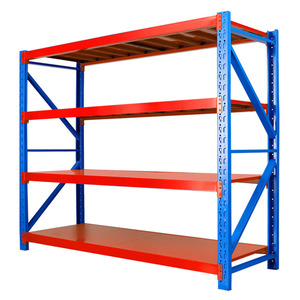
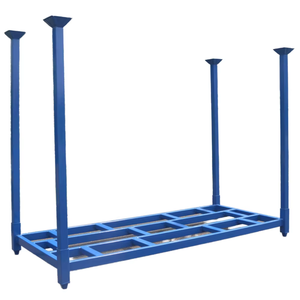
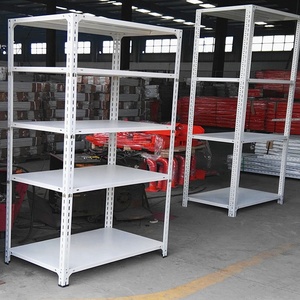
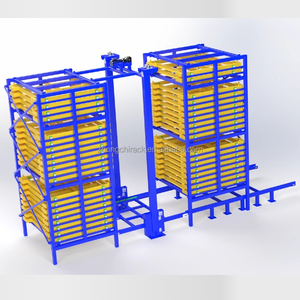
Engineered Heavy-Duty Racking & Pallet Storage Systems
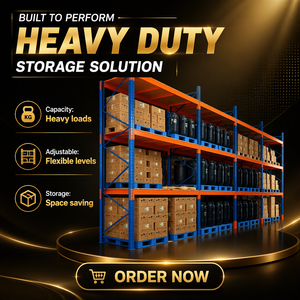
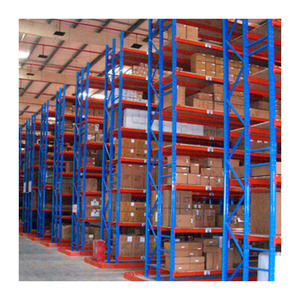
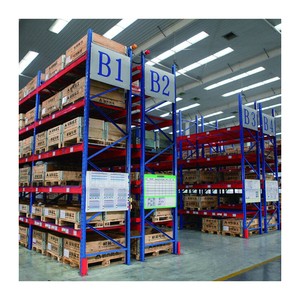
Constructed from high-tensile structural certified steel with thermo-hardened epoxy-polyester electrostatic finishes, our shelving arrays endure desert salinity, ambient dust, and extreme warehouse thermal swings.
GCC Engineering Standards
Precision Intralogistics Architecture Serving Kuwait’s Supply Chain
Operational warehousing across the State of Kuwait demands structural resilience against desert climatic volatility, localized seismic and soil bearing considerations, and intense thermal air cycling.
Industrial warehousing across Kuwait—spanning the concentrated industrial estates of Shuwaikh, the expansive logistics developments in Sulaibiya, and the energy corridors adjacent to Mina Al-Ahmadi—operates under climatic and operational dynamics fundamentally divergent from standard European or North American facilities. With summer ambient surface temperatures regularly exceeding 50°C (122°F), the thermal transfer within uninsulated or semi-conditioned steel sheds creates massive dimensional stresses across bolted and welded racking connections. As a dedicated warehouse pallet shelving systems manufacturer and factory serving Kuwait, our structural engineering department designs every upright, box beam, and baseplate assembly under strict alignment with EN 15512, EN 15620, and FEM 10.2.02 intralogistics calculation standards.
Beyond structural integrity, material protection is critical. Gulf marine air carrying airborne chlorides from the Arabian Gulf merges with fine silica sand particles, creating a caustic, abrasive environment that degrades inferior coatings within 24 to 36 months. We deploy continuous automated profiling lines paired with micro-zinc phosphatizing and high-bake thermoset epoxy powder systems (minimum thickness 70–90 microns). This chemical barrier prevents subsurface oxidation, micro-pitting, and structural fatigue, guaranteeing certified load safety over a 30-year design lifecycle.
Al-Rai & Shuwaikh Urban Logistics
Compact footprint operations requiring hyper-dense selective racking, drive-in systems, and multi-tier picking mezzanines. Maximizing vertical cube density under tight metropolitan land lease constraints where ground-level square footage demands supreme utilization.
Sulaibiya Cold Storage & Food Security
Ultra-dense automated pallet shuttle and mobile racking operating inside -25°C deep-freeze chambers. Serving Kuwait’s critical national strategic food reserves and major FMCG supermarket networks with zero thermal leakage pathways and high cycle rates.
Shuaiba & Ahmadi Energy Logistics
Heavy-duty structural teardrop racking and specialized coil/pipe cantilever arrays designed for petrochemical valves, drill string equipment, and mechanical assemblies, engineered with enhanced impact resistance and project-specific slab anchoring bolts.
Market Evolution
Emerging Trends Transforming Kuwait’s Warehousing Sector
Strategic macroeconomic shifts driven by ‘Kuwait Vision 2035’ (New Kuwait) and the development of the Northern Gateway logistics zone are revolutionizing local supply chain infrastructure.
1. Transition to Clad-Rack Automated AS/RS
As commercial land values escalate along major transportation corridors, developers are pivoting away from standard steel portal buildings toward rack-supported clad-rack structures reaching heights over 35 meters, eliminating the separate cost of structural building columns.
2. WMS & IoT-Driven High-Density Shuttles
Kuwait's Vision 2035 initiatives emphasize smart port handling and sovereign food distribution. Local distributors are replacing manual reach trucks with 4-way pallet shuttles, autonomous mobile robots (AMRs), and smart WMS integrations to counter local labor limitations.
3. Rigorous GCC Fire & Seismic Compliance
Kuwait Fire and Civil Protection Department (KFPD) inspections have become increasingly stringent regarding ESFR (Early Suppression, Fast Response) in-rack sprinkler spacing, flue space clearances, and structural deflection thresholds under seismic and slab load conditions.
Manufacturing Authority
Why Global Supply Chains Rely on Our Manufacturing Ecosystem
From raw coil slitting to turnkey software integration, our fully integrated manufacturing network guarantees end-to-end quality assurance across complex international supply contracts.
60 Years of Engineering Lineage
Six decades of intralogistics innovation, supporting B2B industrial projects in over 70 countries with dedicated engineering offices across 23 nations worldwide.
12 Direct Production Centers
Full control over certified steel sourcing, robotic laser welding, progressive roll-forming lines, and automated packaging, ensuring consistent structural integrity without middleman markups.
7 Global R&D Technology Centers
Continuous mechanical finite element analysis (FEA), dynamic load testing, and proprietary software architecture powering next-generation pallet automation and robotic fleets.
Proprietary Software Integration
Recognized globally for advanced intralogistics software, developing Easy WMS, WES, and WCS suites that eliminate up to 99% of operator picking errors and optimize automated transport.
Seismic & FEM Certified Calculations
Every racking system engineered for Kuwait is modeled individually based on customer pallet dimensions, handling equipment turn radii, floor slab parameters, and local wind/seismic forces.
Full Lifecycle Operational Support
End-to-end execution ranging from initial layout simulation, direct ocean freight customs staging into Kuwait ports (Shuwaikh & Shuaiba), through to on-site assembly, load certification, and annual safety audits.
Procurement Insights
Kuwait Warehouse Shelving Procurement FAQ
Crucial technical, logistics, and regulatory answers addressing common challenges faced by warehouse managers, supply chain directors, and EPC contractors in Kuwait.
What are the key fire safety clearances mandated for pallet racking in Kuwait?
Under Kuwait Fire and Civil Protection Department (KFPD) regulations and NFPA 13 benchmarks, industrial racking systems must maintain longitudinal and transverse flue spaces of no less than 75 mm to 150 mm (3 to 6 inches) between back-to-back racks. This unobstructed vertical chimney ensures early heat triggers ceiling ESFR sprinklers or allows in-rack sprinkler penetration. Furthermore, top-tier pallet loads must preserve a minimum clearance of 900 mm (36 inches) below the deflector plates of roof sprinkler heads.
How does high ambient heat affect pallet rack load capacity calculations in Kuwait?
While high ambient temperatures (up to 50°C) do not exceed the plastic deformation temperature of structural steel, significant thermal cycling between day and night creates differential expansion across continuous runs of pallet racking, specifically along 60+ meter runs. Our engineers introduce expansion joint breaks, verify cold-rolled yield strengths (certified S355 and S250 structural grades), and account for anchor bolt shear expansion within concrete floor slabs to prevent beam unseating or frame misalignment.
Which shipping ports in Kuwait handle factory direct container shipments of racking steel?
Direct factory shipments of pallet racking systems are typically routed through Shuwaikh Port (for central distribution zones like Shuwaikh Industrial, Al-Rai, and Ardhiya) or Shuaiba Port (for Southern Kuwait, Mina Al-Ahmadi, and large industrial heavy machinery hubs). High-cube 40-foot containers (40' HC) or open-top equipment for extra-long upright beams (exceeding 11.8 meters) are bundled using reinforced steel bands and moisture-proof plastic film wrapping to prevent saltwater corrosion during maritime transit.
Can selective pallet racking be integrated with existing slab floors in Sulaibiya and Al-Rai?
Yes, provided the concrete slab compressive strength (typically tested at 25–35 MPa) and thickness (minimum 150–200 mm) can support the concentrated point loads exerted by rack baseplates. In existing leased facilities across Al-Rai and Sulaibiya, our engineering team performs slab load dispersion calculations. Where point loads exceed standard floor tolerances, we engineer oversized footplates, spreader channels, and high-tensile chemical chemical resin anchors to distribute the load across the existing slab without structural cracking.
What documentation is required to clear industrial steel racking through Kuwait Customs?
Kuwait Customs and the Public Authority for Industry (PAI) require a legalized Commercial Invoice, Chamber of Commerce-attested Certificate of Origin (COO), clean Bill of Lading, detailed Packing List, and mill test certificates verifying the steel’s metallurgical properties. Where mandatory, a KUCAS (Kuwait Conformity Assurance Scheme) or TIR (Technical Inspection Report) issued by an approved inspection body (such as SGS, Intertek, or TÜV) confirms the racking conforms to GCC and Kuwait national quality standards.